Showing posts with label Tequila. Show all posts

May 7, 2010

Birthday Weekend Blowout

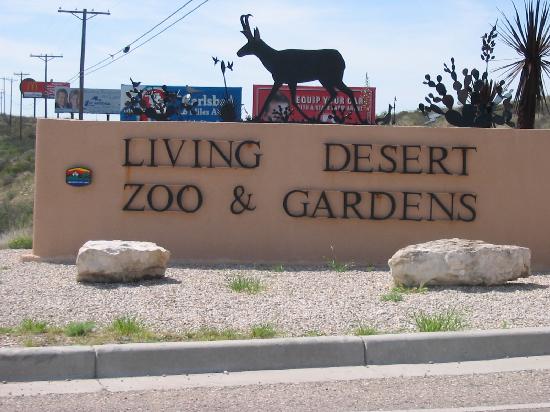
Here we are in Carlsbad celebrating my Mother’s 102nd birthday. After the cool days in Denver last week, it is hot here. Yesterday was 100F, more like Baja than Denver. It has been a busy couple of days catching up with other family members, like a long visit with your best friends. Today when we were visiting at my Mother’s an old family friend, Sally, dropped in to wish my Mother a happy birthday and tell us about the Mescal Roast and Mountain Spirits Dances event sponsored by the Living Desert Zoo & Gardens State Park on the north side of town.

Worthy of a visit

The Living Desert Zoo & Gardens State Park is a zoo and botanical garden displaying animals and plants of the Chihuahuan Desert in their native habitats. It is located atop the Ocotillo Hills overlooking the city and the Pecos River. The zoo features more than forty native animal species, and the gardens feature a greenhouse and hundreds of cacti and succulents from around the world.

The Mescal Roast and Mountain Spirits Dances is a Powwow put on by the Mescalero Apaches and features a dinner with traditional Native American food, dances and singing of the Apache peoples. The mescal was essential for their survival in the harsh desert environment of the Southwest. Historically, both the Pecos River Valley and Guadalupe Mountains here were the traditional hunting and gathering territories for the Mescalero Apaches. It was the Apaches' dependence upon the mescal plant, better known as the familiar spiked-leafed agave or century plant, for food which led the early Spanish explorers to call these people the "mescal makers" or Mescaleros.

Dances at the Powwow
Their mescal roasting pits are the best known archaeological sites in the Guadalupe Mountains. Mescal was a very important and nutritious staple food for the Mescaleros. The roasted mescal was sun dried and used in much the same manner as the Plains Indians used dried meat or jerky. Recent tests by New Mexico State University found that dried mescal leaves contain 85% soluble carbohydrates, 1% protein and 14% insoluble fiber and are roughly equivalent in food value to oats.

Chopping the leaves off the plant in preparation for roasting

Our friend Sally said the celebration this weekend was a noteworthy event. In the conversation that ensued my uncle piped up with, “I thought mescal was a drug.” “No,” said someone else, “you are thinking of peyote.” ”Well what is peyote?” someone else asked. I said, “I will look it up on my new Blackberry phone.” Sally said, “Gosh, I’m hooked, I can’t leave until I know the answer.” It turned out peyote was the dried fruit of a kind of cactus which produces halucinogenic dreams and was incorporated into the southwest Native American culture about 100 years ago from the indigenous peoples of Sonora, Mexico.

“But what is mescal?” my sister Hermana asked. “Oh,” I said being the know-it-all I am, ”that is like Tequila, it is distilled from the agave plant from anywhere in Jalisco state. Any other agave, or blue agave produced elsewhere in Mexico is called mescal. First they roast the agave cores, from which a sweet honey wine is made, then they distill it to make the hard liquor. I know this because we went on a tour of the Jose Cuervo distillery in Tequila,” I added. (Dumb me, the Mescaleros were eating mescal long before anyone ever thought of making alcohol out of it.)

“Wow!” said my niece. “I never thought I would come to Grandmommy’s room on her 102nd birthday to talk about drugs and alcohol!”

October 13, 2009

In search of the best Margarita

The Margarita was invented perhaps as early as the 1930’s in Mexico; rumor has it in Tijuana—or Tasca, Juarez, Acapulco, Puebla, or La Jolla. The word Margarita means ‘Daisy’ and the drink was variously named after Marguerite Hemery (wife of the restaurant owner who invented the drink); Margarita, the fiancée of Danny Negrete’s brother (who is?); Margarita Cansino who later became actress Rita Hayworth; a showgirl named Marjorie King; or Margaret Sames, a rich young Texas socialite.

If you live in Mexico, you have no excuse for not knowing how to make the best Margarita. It has taken me 15 years to fine tune what I considered to be the best Margarita, but it is living in Mexico for the last year that has given me the access to all the right ingredients. When I was in college we would buy a can of Bacardi frozen Margarita mix, dump it and the required amount of Jose Cuervo Tradicional (always adding just a little more than the recipe required) and ice cubes into a blender, and voilá. I don’t remember going to the effort to salt the rim. Blended Margaritas—sublime perfection! In fact I remember having a meeting in the sorority house in one of the girl’s rooms and her blender sat out in plain view in front of an alumnus who felt impelled to comment that she hoped weren’t using that for blending drinks (she had to know we were). No, no, we all said, never! My, my, how my tastes have changed since then. This perfect Margarita I am talking about is not something I invented, it is uses the original 1947 recipe with certain premium ingredients. It is never blended, but always served on the rocks, the rim of the glass is rubbed with a cut limon and twisted in a dish of salt. I have always been a purist, so it is tequila, key lime juice and orange liqueur—none of these nouveau watermelon or raspberry concoctions for me.

In 1996 we discovered the tequila for making the best Margaritas. We were flying Esperando’s Cessna 205 from the US to Panama where we were living at the time. Along the way we stopped in Puerto Vallarta and stayed at the El Presidente Hotel. At the bar the bartender gave us lots of premium shots or as we call them down here, caballos, of tequila. The bartender included Cazadores Reposado among his choices and he recommended it as the best for Margaritas. After comparing it with the others we agreed with him and so that has been our choice ever since.

When I was organizing for our big party the other night, I went to look up my recipe in my little red book (which also lists all the clothes I have ever taken on any trip going back to when we were first married—anal, huh?—but that way I just pull out my list and I don’t have to rethink what kind of clothes to take again somewhere.) I knew I had it scribbled in there, but darned if I could find it. So I went to the internet and looked up ‘original 1947 Margarita’ and was rescued. At the party I got many compliments from the Mexicans on my Margaritas, the gringos not so much. That is probably because most gringos like really sweet Margaritas like I used to make with lots of Persian lime (big green limes that you find in the US grocery stores) juice and sugar. A long time ago in the USA I thought I made a terrific margarita and it was one of those kinds. Then every occasionally we would go to Juarez and the restaurant at the PRONOF Center (sadly now defunct) served an incredible Margarita, but I couldn’t figure out how to make it. About then we came across a newspaper column with what claimed to be the original recipe from Tijuana circa 1947. It was not a sugary limey Margarita but the real thing, like we would get in Juarez. I tried making it but it still didn’t taste right. What I didn’t know was that I needed lots more orange liqueur and key limes, not Persian limes. Once you cross the border into Mexico the Persian lime does not exist.

#1 The “original’ 1947 recipe I found on the internet was this:
2 jiggers tequila,
1 jigger orange liqueur
1 jigger fresh key lime juice

#2 Then I found it in my little red book, and the ‘original’ recipe was this:
2 jiggers Cazadores Reposado tequila,
1 jigger Controy (the Mexican cousin of cointreau)
1/2 jigger key lime juice.

Hmm, we had to know the truth, which was best? Last night we prepared one of both kinds of the ‘original’ recipes. The first was tarter as you would expect with the greater amount of key lime juice, and the second was a bit too strong so we poured the two together and felt it was perfect. You can't really go wrong with either one, but they are quite strong so make sure you put in lots and lots of ice—and try not to drink more than one. Its dangerous.


Margarita #1 on the left is a little more yellow colored and tarter


Margarita #2 is stronger tasting, no so tart

November 9, 2008

How I spent my summer vacation

Well here we are in Santa Rosalia after a week’s vacation in that most festive of Mexican cities, Guadalajara. We stayed at Don Quinto Jose, a delightful B&B in the heart of Tlaquepaque, a suburb of Guadalajara famous for stores and galleries that are housed in old colonial casonas—grand old houses. Anyone of them would have been perfect to move into with its thick walls to keep you cool inside and shaded fountain courtyards. Those that aren’t shops are fabulous restaurants that throw singing canaries and splashing fountains into the ambiance along with unusual food and music. The main street is just for pedestrians and is lined with shops and benches where talented poor people sing their hearts out for a few coins.

Esperando and I decided that Tlaquepaque and Tonalá (another artisan suburb) are where you would want to go to furnish and decorate your home Mexican style. This means that much of what you find will not fit in your suitcase because it is furniture, chandeliers, glass or ceramic or way too big. Where I could, I bought textiles which transport more easily.

One of our missions was to find an unusual and not too expensive nativity set which we finally encountered in Tequila, an hour’s drive away and our day excursion from Guadalajara. A taxi conveyed us out of Tlaquepaque for a 25 minute trip to the car rental agency in downtown Guadalajara, making a u-turn in the middle of a busy bidirectional 6-lane street, turning from the outside right lane going west across oncoming traffic into the eastbound lane far right to place us right at the front door. Be still, my heart! Once we got in our rental car to undertake the journey, I was sure we has made a really bad decision and would become permanently lost. The full extent of the city’s 3 million population wasn’t so obvious when you just take a taxi across town. It’s once you are on the roads driving and driving and you are still in a city that you begin to realize this. We did miss our turn getting out of central Guadalajara and drove about 10 blocks the wrong direction before we got back on track. The many one way 3- and 4-lane streets seemed daunting initially, but the roads were relatively well signed and the map in our guidebook was sufficiently detailed to get us there.

We took the ‘old’ highway which took us through the little towns on the way rather than the toll road. After we got into blue agave country—much like driving through the California wine country--each little town would have stalls selling tequila along the roadside. Tequila, like Champagne in France, is an appellation limited to the state of Jalisco and a few other small areas of neighboring states and can only be made from blue agave. When we got to Tequila, a quaint and prosperous small town, we had a tour at the world class Jose Cuervo distillery and another of the Sauza family home built in the 1800’s, now a museum housing the family’s history. It was there we found a darling corn sheaf crèche to take back with us to Santa Rosalia.

They wrapped it up carefully in tissue paper and we hand carried it in a paper bag so it wouldn’t get crushed in transit. We drove back to Guadalajara and gave ourselves a pat on the back that we actually maneuvered through the one-way streets and heavy traffic to get back to the National rental counter. Taxi back to the hotel, and another taxi to the airport for our airplane to LA. Once onboard, we placed our delicate little bundle carefully in the overhead bin arguing with the stewardess that it was fragile and we didn’t want to put it in the bin until everyone else had organized their things. Finally we made it back over the course of several days, pressed the green light in customs at the airport in Loreto and almost made it out of the terminal before the agriculture guy said, “Do you have food in the bag.” “No,” said I. “Let me see it,” he said. “You can’t keep this, it is made of plant matter.” “Yes corn sheaves, we bought it in Guadalajara.” figuring Mexican corn sheaves would be acceptable. “Do you have a receipt?” “Yes here.” “But it doesn’t say what it is made from.” “Its made from corn sheaves here in Mexico.” After about 15 minutes of this dialog we finally gave up and left Mary, Joseph and the wise men behind. Because Baby Jesus and a sheep had been packed even more carefully in my suitcase, they survived unscathed, but they look pretty lonely sitting around by themselves. I think maybe the sheep sings lullabys when I’m not in the room.